EN
EN

Kétszemélyes PET membránkapcsoló az ember-gép kapcsolathoz | VMANX
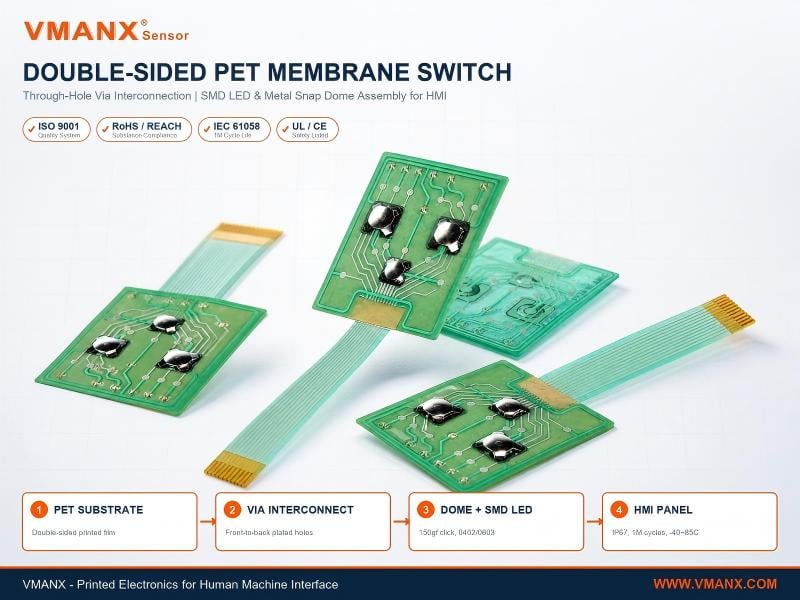
A VMANX, egy ISO 9001 tanúsítvánnyal rendelkező nyomtatott elektronikai gyártó cég, amelynek 19 éves tapasztalata van a rugalmas áramkörök területén, gyártja a kétoldalas PET membránkapcsolót – egy furatos összeköttetésű membránáramkört, amely vezető nyomvonalakat irányít mindkét oldalára egyetlen poliészter fóliának. A terméket ipari HMI (ember-gép interfész) vezérlőpanelekhez Dongguanban, Kínában gyártják. A tervezés rézbevonásos furatokkal köti össze az elülső és hátsó áramkör-rétegeket, majd fémes kattanó kupolákat és felületre szerelhető LED-eket rögzít közvetlenül a rugalmas alapanyagra, mivel a tervezőknek nagyobb vezetékezési sűrűségre van szükségük anélkül, hogy merev nyomtatott áramkörlemezt (PCB) kellene elhelyezniük az interfész mögött.
Miért változtatja meg a kétoldalas áramkör-tervezés az HMI panelterveket
Az egyoldalas membránkapcsolók minden vezetéket egyetlen síkra kényszerítenek. Ahogy a billentyűk száma nő, és hátvilágítást is hozzáadnak, a tervezők kifutnak a vezetékezési helyből, és vagy nagyobb panel felé, vagy különálló merev PCB felé kényszerülnek. Mindkét megoldás pénzbe, vastagságba és szerelési lépésekbe kerül.
A VMANX kétoldalas áramkörnyomtatással egy PET-fólián, valamint a rézbe vonatkozó fúrt lyukakon keresztüli összekötéssel eltávolítja ezt a korlátot. A sűrű billentyűzetmátrixok, az LED-ek tápellátásához szükséges vezetékpályák és a jelvisszatérők rétegezhetők, nem pedig zsúfoltan elhelyezhetők, így a felület vékony marad, miközben a funkcionális sűrűség növekszik.
Fő jellemzők és előnyök
Átmenő lyukakon keresztüli kapcsolódás
A vezetőképes lyukak átmennek a PET-alapanyagon, és összekötik az előoldali és a hátsó oldali ezüstvezetékeket egy folytonos hálózattá. Ez lehetővé teszi, hogy az áramkör önmagán átmenjen anélkül, hogy ugróvezetékek vagy nyomtatott szigetelő kereszteződések szükségesek lennének – ez a két leggyakoribb hibahely a nagy sűrűségű egyszeres oldalú elrendezésekben. A kereszteződések függőlegesek lesznek, nem vízszintesek, ami rövidebb vezetékpályákat eredményez, és csökkenti az összesített hurokellenállást legfeljebb 1 Ω-ra a kupolarendszer telepítése esetén.
Ügyfél-scenario: egy 20 billentyűs vezérlőmátrix, amely egy túl nagy egyszeres oldalú panelt igényelne, összehajtható egy kompakt kétoldalú elrendezésbe, amely illeszkedik egy meglévő keretnyílásba – az enclosureszereléshez nem szükséges szerszámváltás.
Fém nyomógomb kupola tapintási visszajelzéssel
A rozsdamentes acélból vagy nikkel-ezüstből készült kupolák a nyomógomb nyomtatott érintkező párnáira vannak ragasztva, így meghatározott tapintási kattanást biztosítanak. A működtetési erő 150±50 gf, az elmozdulás kb. 0,2±0,05 mm, amely lehetővé teszi a működés egyértelmű érzékelését kesztyűben is – ez különösen fontos gyártóüzemekben, ahol a hallható visszajelzést a környező zaj elnyomja. Mivel a kupolák nyomtatott érintkező párnára helyezkednek, nem pedig mechanikus házra, az egész szerkezet vastagsága 0,5–1,2 mm között marad, miközben az IEC 61058 szabvány szerint 1 000 000-nél több működtetési ciklusra van méretezve.
Közvetlen SMD LED-ek beépítése rugalmas fóliára
A VMANX bonds 0402 és 0603 felületre szerelhető LED-eket közvetlenül a membránkörre helyezi, így elkerüli a hagyományos háttérvilágítású paneleken használt külön fényvezető nyomtatott áramkört. A grafikus fedőrétegen keresztül történő fényátvitel eléri vagy meghaladja a 85 %-ot, így az állapotjelzés és a billentyűk háttérvilágítása alacsonyabb meghajtóáram mellett is jól látható marad. Több zónás LED-tömbök, szélen világított fényvezetők és elektrolumineszcens (EL) panelek is támogatottak, így egyetlen felület képes többállapotú gépállapotok – például várakozás, működés, hiba – megjelenítésére anélkül, hogy a panel mögött további mélységet kellene hozzáadni.
Zárt szerkezet kemény ipari környezetekhez
A ragasztott fóliaréteg-csomag egy folyamatos, tömített felületet alkot, amely IP67-es besorolású, így por behatolását és rövid ideig tartó vízalámerülést is ellenáll. A működési hőmérséklet-tartomány -40 °C és +85 °C között van, a csúcshőmérséklet-tűrés +120 °C, továbbá az összeszerelés 1000 órán át elviseli a 85 °C / 85 % RH páratartalom melletti nedves meleg környezetet, miközben az ellenállás-drift értéke legfeljebb 15 % marad. Az opcionális fémesített PET-pajzolás legalább 30 dB EMI-csillapítást biztosít, így megfelel az FCC és CE előírásoknak olyan berendezések esetében, amelyeket motorhajtások és kapcsolóüzemű tápegységek közelében telepítenek.
Műszaki adatok
|
Paraméter |
Műszaki adatok |
Szabvány / módszer |
|
Alapanyag |
PET-poliszter fólia, kétoldalas nyomtatott áramkör |
— |
|
Összeköttetés |
Fémbevonatos átmenő furatok (elől hátulra) |
— |
|
Áramkör réteg |
Ezüstpaszta / maratott réz, ≤0,1 mm |
— |
|
Érintkezési ellenállás |
≤100 Ω (kezdeti) |
Belső szabvány |
|
Hurok ellenállás |
≤1 Ω (kupolás rendszerrel) |
Belső szabvány |
|
Szigetelési ellenállás |
≥100 MΩ 500 VDC-nél |
Belső szabvány |
|
Üzemi feszültség |
≤50 VDC |
— |
|
Névleges áram |
≤100 mA |
— |
|
Tapintási elem |
Rozsdamentes acél / nikkel-ezüst kattanó kupola |
— |
|
Működtetési erő |
150±50 gf |
— |
|
Billentyűút |
0,2±0,05 mm |
— |
|
Üzemelési élettartam |
≥1 000 000 ciklus (tapintásos) |
IEC 61058 |
|
LED-összeállítás |
0402 / 0603 SMD, közvetlenül ragasztva |
— |
|
Világítás átviteli képesség |
≥85% |
— |
|
EMI Védelem |
≥30 dB (fémfelületű PET változat) |
FCC / CE |
|
Összes vastagság |
0,5–1,2 mm (konfigurációtól függően) |
— |
|
Működési hőmérséklet |
-40 °C és +85 °C között, csúcs: +120 °C |
— |
|
Hőcsoportosítás |
-40 °C és +85 °C között, 1000 ciklus, repedésmentes |
Belső szabvány |
|
Páratartalmú hőség |
85 °C / 85% RH, 1000 óra, ΔR ≤15% |
Belső szabvány |
|
Vegyianyag-álló |
Alkohol / IPA, 500 tisztítás, nincs rétegleválás |
Belső szabvány |
|
UV ellenállás |
QUV-A 340 nm, 500 óra, ΔColor ≤1,5 |
UV-meghajtású felületi réteg |
|
Bejárati Védelem |
IP67 (hermetikusan záródó kivitel) |
— |
|
Kanyarozási sugár |
≥10 mm (dinamikus használat) |
— |
|
Ragasztó |
3M ragasztó, –40 °C-tól +120 °C-ig, VOC-mentes |
EU környezetvédelmi szabályzat |
|
ESD Védelem |
±15 kV (opcionális) |
— |
|
Minőségi Rendszer |
ISO 9001 tanúsítvány |
— |
|
Megfelelőség |
RoHS, REACH, UL, CE |
— |
|
Gyártás |
ISO 6-os osztályú tisztasági osztály („Class 1000” tisztasági szoba), AOI optikai ellenőrzés |
IPC-620 szériánként |
|
Garancia |
36 hónap (szokásos használat mellett) |
— |
Ügyfél-Gyakran Ismételt Kérdések
K: Mi egy kétoldalas membránkapcsoló, és miben különbözik a szokásostól?
V: A szokásos membránkapcsolónál az összes vezető nyomtatott nyomvonal ugyanazon a fóliaoldalon helyezkedik el. A kétoldalas PET membránkapcsolónál a nyomtatott áramkörök mindkét felületen elhelyezkednek, és rézbevonatos átmenő furatokkal (via) vannak összekötve. Ez lehetővé teszi a nyomvonalak függőleges keresztezését, nem szükségesek a nyomtatott szigetelő kereszteződések, így sokkal sűrűbb billentyűzetmátrixok valósíthatók meg ugyanazon a panelfelületen.
K: Miért érdemes átmenő furatokat (via) használni a nyomtatott átvezető kereszteződések helyett?
V: A nyomtatott kereszteződések minden metszéspontnál egy szigetelő dielektrom réteget igényelnek, és mindegyik potenciális rövidzárlat- vagy leválási hely lehet. Az átmenő furatok (via) a kereszteződést a harmadik dimenzióba viszik, csökkentve a rétegek számát a metszéspontnál, rövidebb vezető útvonalat biztosítanak, és javítják a hosszú távú megbízhatóságot rezgésnek kitett berendezésekben.
K: Szerelhetők-e LED-ek és kattanó kupolák ugyanarra a rugalmas áramkörre?
A: Igen. A VMANX kötőanyagok 0402/0603 SMD-LED-eket és fémes kattanó kupolákat rögzítenek ugyanarra a kétoldalas membránra. Az LED-ek háttérvilágítást vagy állapotjelzést biztosítanak, miközben a kupolák tapintásérzékeny visszajelzést nyújtanak – mindez 0,5–1,2 mm-es rétegvastagságban, külön merev nyomtatott áramkör nélkül a felület mögött.
K: Milyen üzemidejre számíthatok egy ipari vezérlőpanelen?
A: A tapintásérzékeny változatok IEC 61058 szerint több mint 1 000 000 működési ciklusra lettek minősítve. Az IP67-es tömítés és a –40 °C–+85 °C-os üzemhőmérséklet-tartomány mellett az összeállítás folyamatos üzemre lett tervezve PLC-paneleken, kültéri műszerekben és folyamatirányítási berendezésekben.
K: Alkalmas-e a membránkapcsoló motorhajtások közelében használt berendezésekhez?
A: Igen, az opcionális fémesített PET-védőréteg 30 dB vagy annál nagyobb EMI-csillapítást biztosít, amely megfelel az FCC és a CE előírásainak. Az ±15 kV-os ESD-védelem is elérhető egyéni igény szerint.
K: Milyen testreszabási lehetőségek állnak rendelkezésre OEM-projektekhez?
A: A lehetőségek közé tartoznak a grafikus felületi felületek (matte, csillogó, textúrázott, simított fém, lézeres gravírozás), a háttérvilágítási architektúra (zónázott LED-tömbök, szélen világított vezetők, elektrolumineszcens panelok), az ujjlenyomat- és páramentesítő bevonatok, a csatlakozók távolsága és vezetékezése, valamint a nem érintéses, halk működtetés zajérzékeny környezetekhez.
K: Mi a tipikus érvényesítési és gyártási folyamat?
A: A tervezési érvényesítés az FEA-szimulációt kombinálja a 3D nyomtatott prototípusokkal a szerszámgyártás előtt. A gyártás egy 1000-es osztályú tisztasági fokozatú tisztasági teremben zajlik AOI optikai ellenőrzéssel és minden tételre vonatkozó IPC-620 tanúsítással, amelyet 36 hónapos szabványos használati garancia támogat.
Műszaki támogatás OEM interfészprogramokhoz
A VMANX támogatja az OEM és ODM programokat a sémavizsgálattól kezdve a gyártásra való átadásig, beleértve a nyomtatott áramkörök optimalizálását, a kupolák erőkiválasztását, az LED-zónázást és a csatlakozó interfész meghatározását. A teljes platformadatok elérhetők a műanyag billentyűzet műszaki leírása , míg a szélesebb Hmi humán gépi felület skála érintőpaneleket, membrán potenciometereket és rugalmas nyomtatott áramkörök ipari vezérlési alkalmazásokhoz. A termék kiválasztásához lásd a membránkapcsoló termék oldalát.
Összefoglalás
A kétoldalas PET membránkapcsoló megoldja a hagyományos, egyoldalas HMI-panelek irányítási sűrűségére vonatkozó korlátozást. Az átjárókon keresztüli összeköttetés, a közvetlen SMD LED-rögzítés és a fémes nyomógomb-integráció egyesül egy tömített, submilliméteres felületként, amely egymillió ciklusra van méretezve – így az ipari berendezések tervezői több funkciót tudnak elhelyezni négyzetcentiméterenként anélkül, hogy merev nyomtatott áramkörlemezt vagy növelt panelmélységet kellene használniuk.
VMANX — nyomtatott elektronika ember-gép interfészhez. | www.vmanx.com
Média- és SEO-javaslatok
Főkép: fájlnév: double-sided-pet-membrane-switch-hmi-interface.jpg | ALT: „Kétoldalas PET membránkapcsoló panelek átmenő furatos átjárókkal, fémes nyomógombokkal és rugalmas csatlakozóval ipari HMI-hez”
Részletkép: fájlnév: membrane-switch-via-interconnection-detail.jpg | ALT: „Átmenő furatos átjárók összekötik az elülső és hátsó ezüst áramköri rétegeket a PET-fólián”
Szerelési kép: fájlnév: smd-led-metal-snap-dome-membrane-assembly.jpg | ALT: „0402-es SMD LED és fémes kattanó kupola közvetlenül rögzítve egy rugalmas membránkapcsoló áramkörre”
Videó (YouTube): „Kétszintes PET membránkapcsoló átvezető kapcsolattal és SMD LED szereléssel | VMANX”
Fő kulcsszó: kétszintes PET membránkapcsoló
Másodlagos kulcsszavak: membránkapcsoló HMI, átvezető lyukas kapcsolat, SMD LED membránkapcsoló, fémes kattanó kupolás tapintásérzékeny kapcsoló, rugalmas nyomtatott áramköri membránkapcsoló, ipari HMI vezérlőpanel
Meta leírás (158 karakter): „Kétszintes PET membránkapcsoló átvezető lyukas kapcsolattal, SMD LED rögzítéssel és fémes kattanó kupolákkal ipari HMI panelokhoz. IP67, 1 millió ciklus, ISO 9001.”
Tanúsítási hatókör (F4 ipari HMI család): ISO 9001 · RoHS · REACH · UL · CE · IEC 61058
Közzétételi megjegyzés: jelenítse meg a közzététel dátumát a hírek kezdőlapján; tartsa meg a 2–4 cikk havonta ütemezést.