EN
EN

Zpráva o testování sílového snímače s odporovou citlivostí CPR (FSR)
Při kardiopulmonální resuscitaci (CPR) musí stlačení hrudníku dosahovat hloubky 5–6 cm při frekvenci 100–120 stlačení za minutu – síla stlačení u dospělých se obvykle pohybuje mezi 40 a 60 kg a může dosáhnout až 80 kg. Senzor, který tuto sílu měří, není pouze prvkem pro zvýšení komfortu; je součástí zpětnovazební smyčky kritické pro zachování života. Mezi 15. a 27. srpnem 2026 dokončil laboratorní ústav VMANX spolehlivostní testovací protokol o 11 položkách pro flexibilní sílový senzor VF-3119-030 typu FSR. Všechny položky splnily požadavky. Současně zákazník provedl na integrovaném zařízení test životnosti při stlačování po dobu 10 milionů cyklů – i tento test byl úspěšně dokončen.
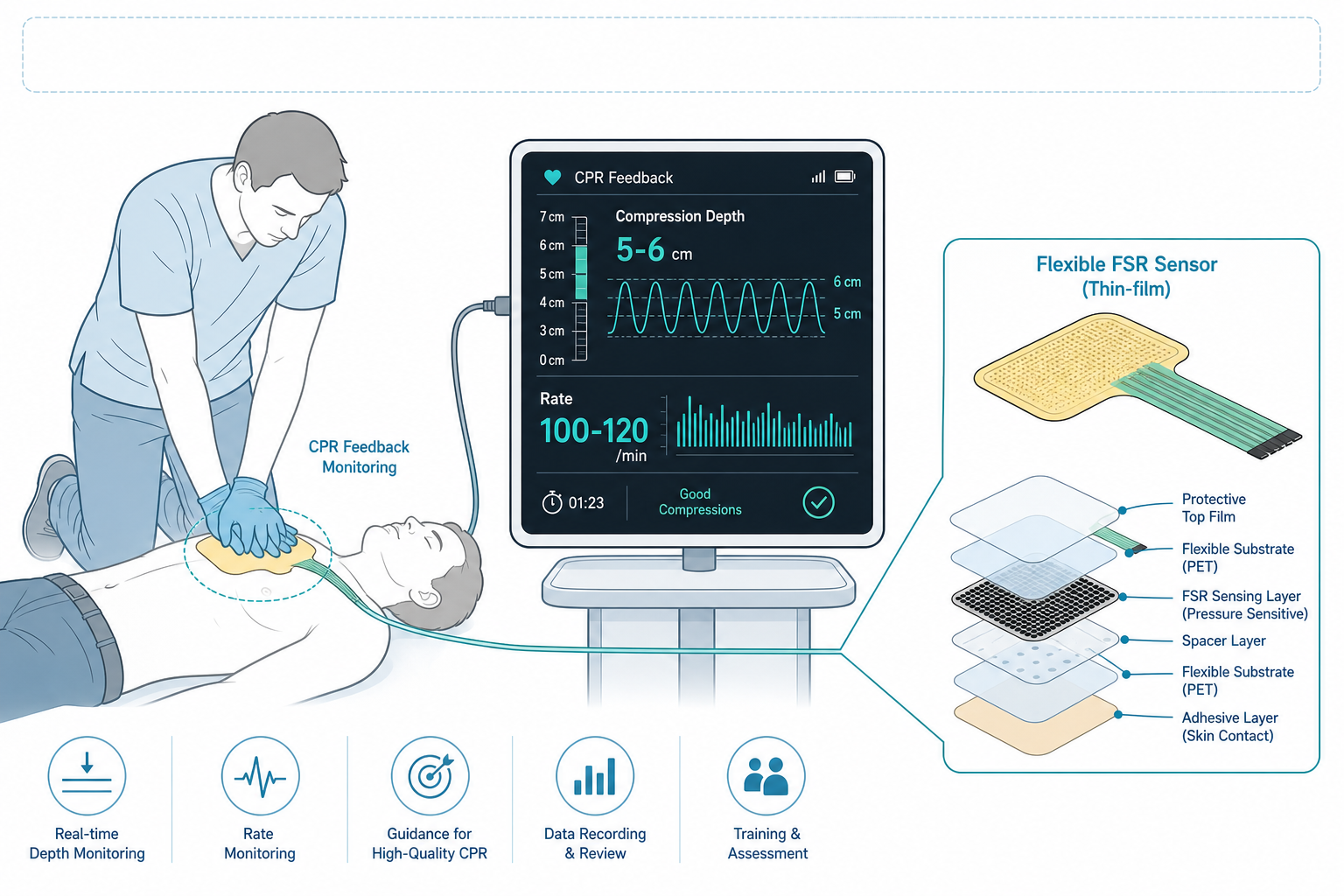
Zpětná vazba při stlačování hrudníku při CPR: flexibilní senzor FSR měří sílu i rytmus stlačení v reálném čase
Otázka 1. Co tento senzor v zařízení pro CPR skutečně dělá?
VF-3119-030 je pružný tenký filmový senzor síly (FSR). Jeho odpor klesá monotónně se zvyšující se působící silou, takže naměřený odpor lze přímo převést na tlakovou sílu. Umístěný mezi rukama zachránců a hrudníkem pacienta – nebo zabudovaný do manekýnu pro trénink resuscitace nebo do podložky s zpětnou vazbou – zařízení, a tedy i zachránce, informuje, zda je každý stlačovací pohyb dostatečně silný a zda se udržuje správný rytmus.
V této aplikaci senzor neměří stisk tlačítka. Měří kvalitu pokusu o resuscitaci – tisíckrát za zařízení, často v sanitce, v učebně pro školení nebo na venkovním místě nouzové události.
Otázka 2. Proč je spolehlivost důležitější než v typické senzorové aplikaci?
Protože režimy poruchy jsou tiché. Senzor, který se po deseti dnech nepřetržitého zatížení posune nebo jeho nulový bod se změní po chladné noci v záchranném vozidle, se neprojeví – jednoduše hlásí nesprávnou sílu. U zařízení pro zpětnou vazbu při resuscitaci to znamená, že zachránce může dostat informaci, že stlačení je dostatečné, i když tomu tak není.
Proto protokol VMANX nepostačuje otázka „funguje to?“. Ptá se: funguje to stále stejně po 20 cyklech tepelného šoku mezi +85 °C a −40 °C? Po 240 hodinách skladování za vysokých i nízkých teplot? Po deseti dnech pod stálým zatížením 5 kgf? Je jednotka č. 1 stejná jako jednotka č. 10?
Otázka 3. Jaký testovací protokol byl použit?
Jedenáct položek, prováděno 15.–27. srpna 2026 v laboratoři VMANX s odkazem na environmentální metody IEC 60068-2 a ISO 16750. Toto je přehled kvality a spolehlivosti, který uplatňujeme u komponent pro měření sil, jejichž funkce je životně důležitá:
| # | Testovaná položka | Podmínka / metoda | Výsledek | Závěr |
| 1 | Síla spuštění | 10 ks, kompletní kontrola | 4–9 gf (průměr 5,9 gf) | Prospěl |
| 2 | Rozsah měření | 50–3 000 gf, 10 ks | 6,47 kΩ při 50 gf → 1,01 kΩ při 3 000 gf | Prospěl |
| 3 | Shoda dávek od dávky ke dávce | 10 ks, identické síly působení | CV ≤ 12,9 % (≤ 6 % při vysoké síle) | Prospěl |
| 4 | Impedance bez zatížení | 10 ks, před / po klimatickém testu | 9,8–11,3 kΩ → 9,9–11,0 kΩ | Prospěl |
| 5 | Chyba hystereze | 3 ks, zatěžování / odlehčování 50–2 000 gf | ≤ 2 % při 2 000 gf | Prospěl |
| 6 | Trvanlivost při nepřetržitém zatížení | 2,5 kgf × 24 h | 1,0–1,1 kΩ, drift < 5 % | Prospěl |
| 7 | Dlouhodobé posunutí | 5 kgf × 10 dní, 30 měření | 153,2–160,9 Ω (±2,5 %) | Prospěl |
| 8 | Tepelný šok | +85 °C ↔ −40 °C, 20 cyklů | Tvar křivky nezměněn, funkce v pořádku | Prospěl |
| 9 | Ukládání za vysoké / nízké teploty | −40 °C a +85 °C, po 120 h (celkem 240 h) | Vzhled a výkon vyhovují | Prospěl |
| 10 | Ověření maximální síly | zatížení 80 kg | 89,7 Ω, žádné poškození | Prospěl |
| 11 | Kalibrace citlivosti | Korelace mezi odporem a silou | 100 Ω ↔ 27,95 kg | Prospěl |
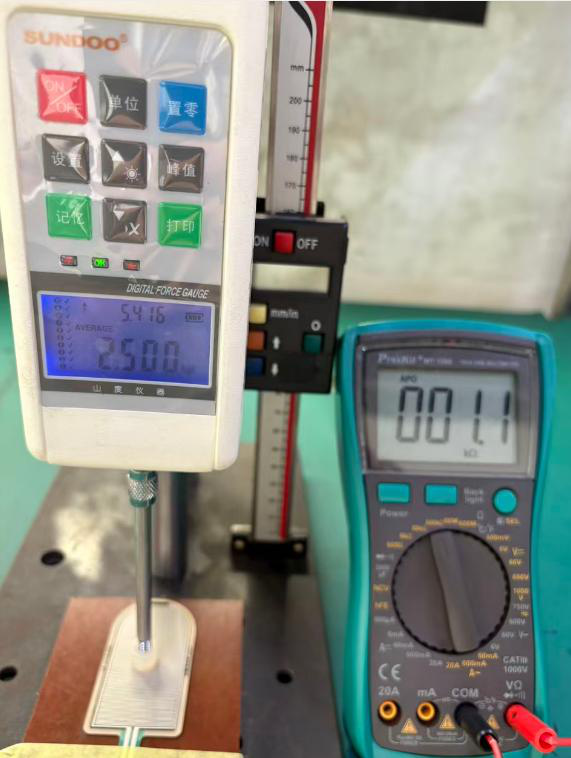
Nastavení zkoušky: digitální siloměr SUNDOO s přesným multimetrem Precision MT-1280 na kalibrovaném stojanu
Q4. Které výsledky jsou pro inženýra zařízení pro KPR nejdůležitější?
Tři z nich.
▪ Rozsah pokrývá skutečné použití. Síly stlačení při KPR dosahují extrémně přibližně 80 kg. Při 80 kg senzor ukázal 89,7 Ω a vrátil se do normálu – žádné nasycení, žádné poškození. Celá křivka od 50 gf výše je hladká a monotónní, což umožňuje spolehlivou kalibraci.
▪ Nepodléhá driftu při trvalém zatížení. Deset dní při konstantní síle 5 kgf vyprodukovalo celkový rozptyl 153,2–160,9 Ω, tedy přibližně ±2,5 % – lepší než referenční návrhová hodnota ±4 %. Zařízení zkalibrované prvního dne zůstává přesné i desátého dne.
▪ Odolává prostředí. Po 20 cyklech tepelného šoku mezi +85 °C a −40 °C zůstala charakteristika odporu v závislosti na síle nezměněná a senzor zůstal plně funkční; po 240 hodinách skladování při −40 °C a +85 °C byly jak vzhled, tak výkon v souladu se specifikací.
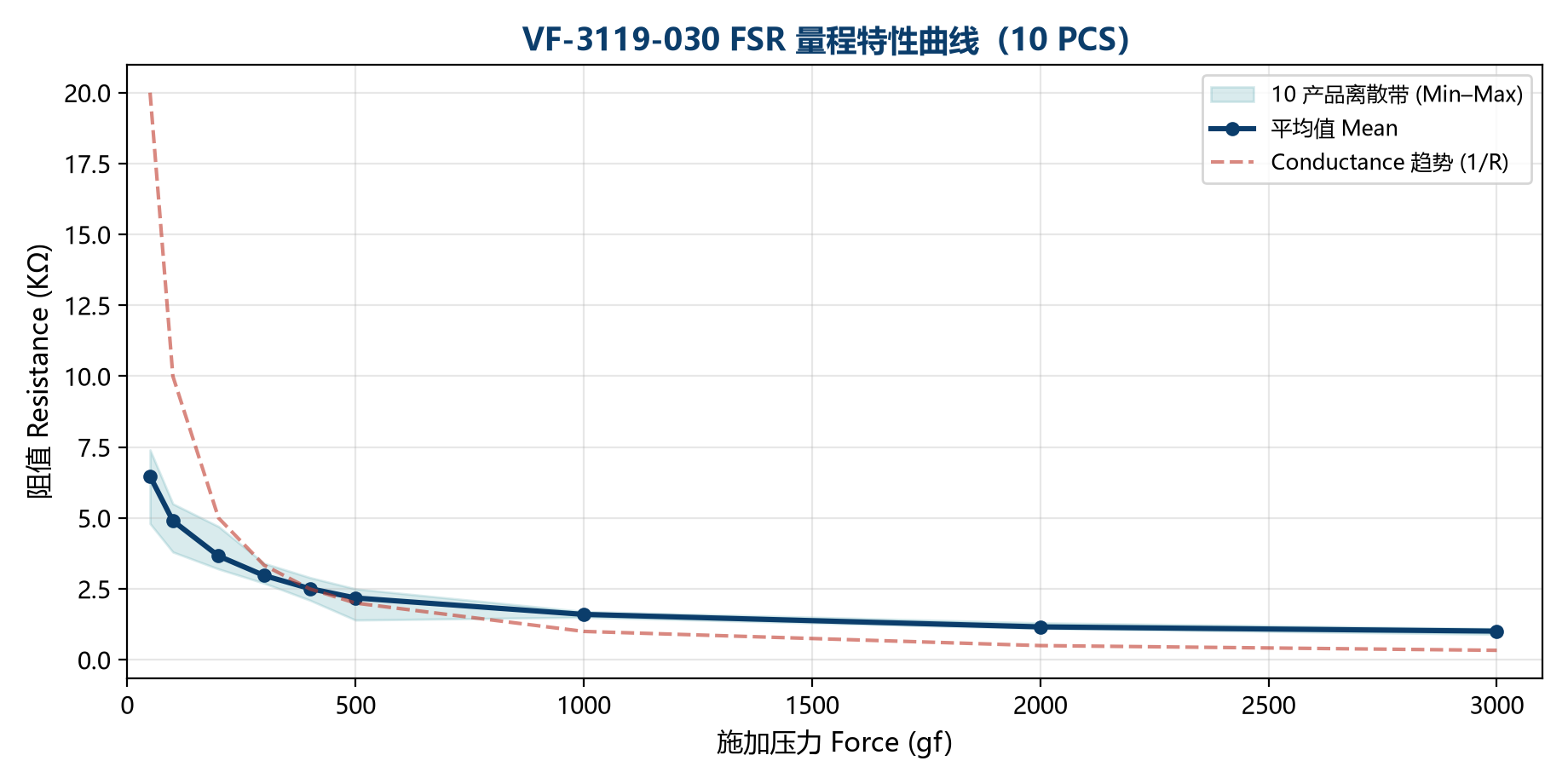
Obr. 1 Charakteristika měřicího rozsahu — 10 ks, úzký rozptylový pás, hladká monotónní odezva
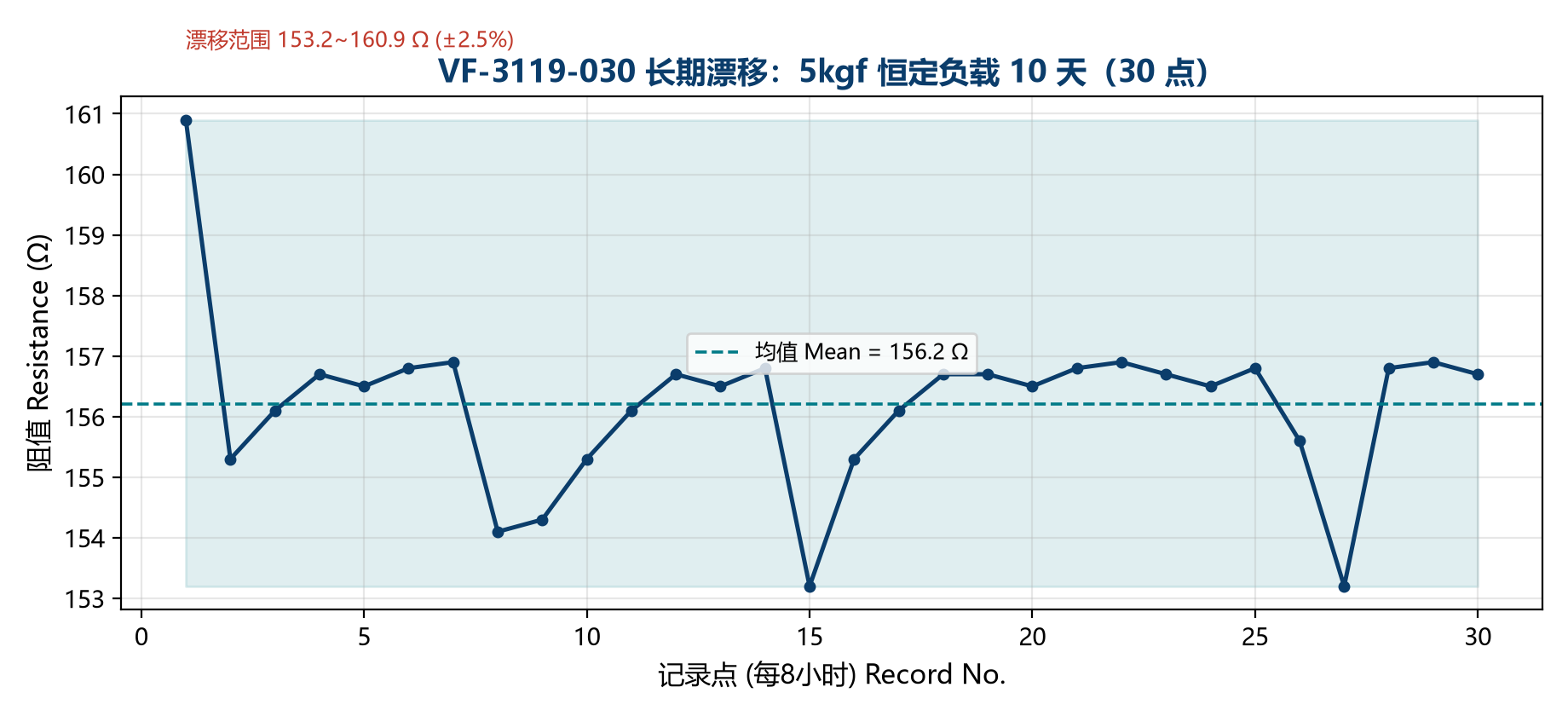
Obr. 2 Dlouhodobý drift — konstantní zatížení 5 kgf po dobu 10 dnů, celková změna ±2,5 %
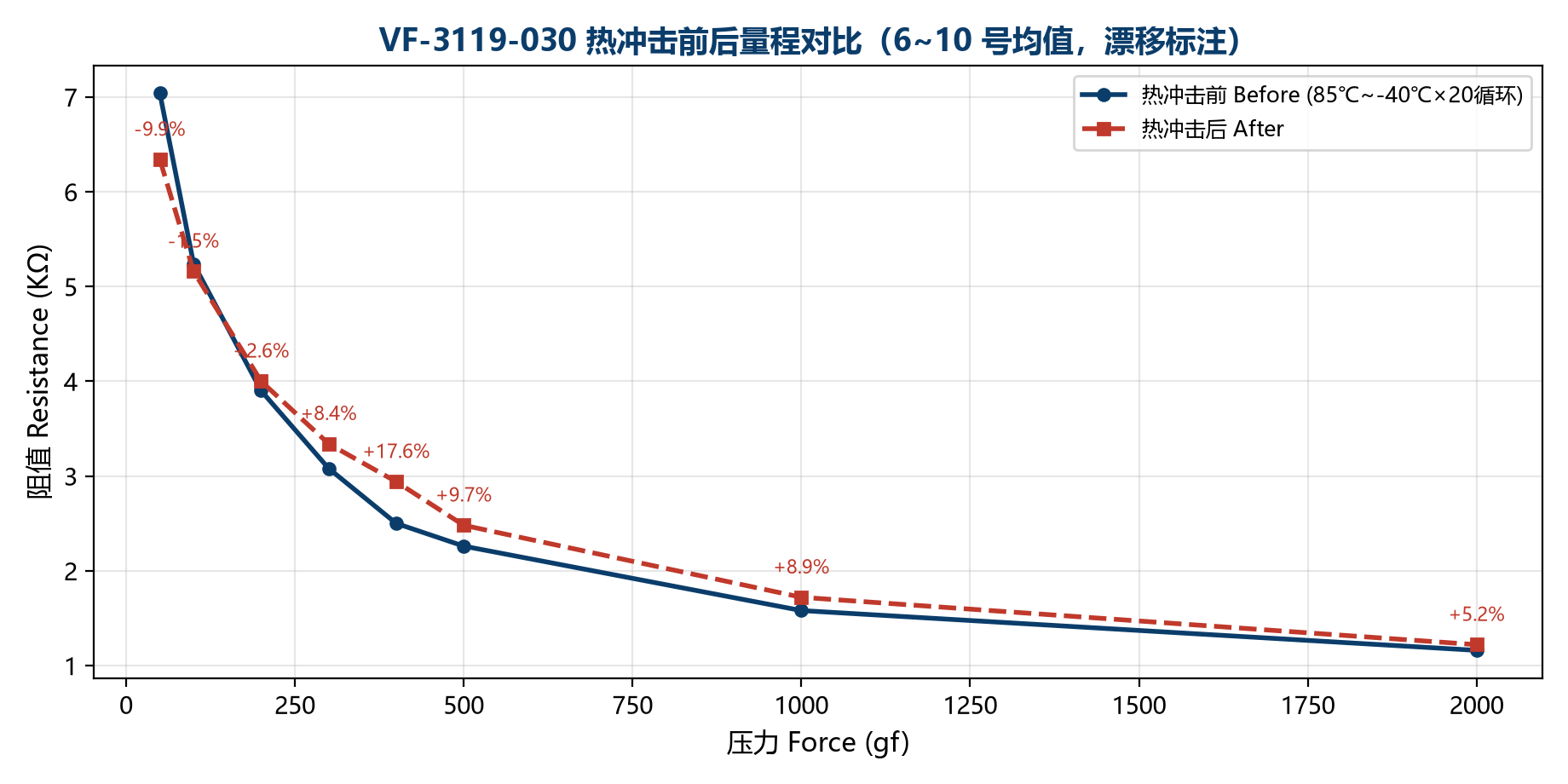
Obr. 3 Tepelný šok, před a po 20 cyklech (+85 °C ↔ −40 °C) — tvar křivky zachován
Q5. Jak byla prokázána dlouhodobá životnost?
Zákazníkem na dokončeném zařízení. Zákazník provedl test životnosti při stlačování na 10 milionů cyklů na integrovaném výrobku a potvrdil jeho úspěšné absolvování.
Abychom to číslo dali do kontextu: při 100–120 stlačeních za minutu trvá plná desetiminutová resuscitace přibližně 1 000–1 200 stlačení. Deset milionů cyklů je tedy ekvivalentem více než 8 000 úplných resuscitačních událostí – což výrazně přesahuje životnost zařízení, do něhož je senzor integrován. Laboratorní data ukazují, jak se senzor chová; tento test ukazuje, jak dlouho si toto chování udržuje.
| Ověření trvanlivosti | Oblast působnosti | Výsledek |
| test životnosti při 10 000 000 stlačení | Zařízení integrované na straně zákazníka | Přijaty |
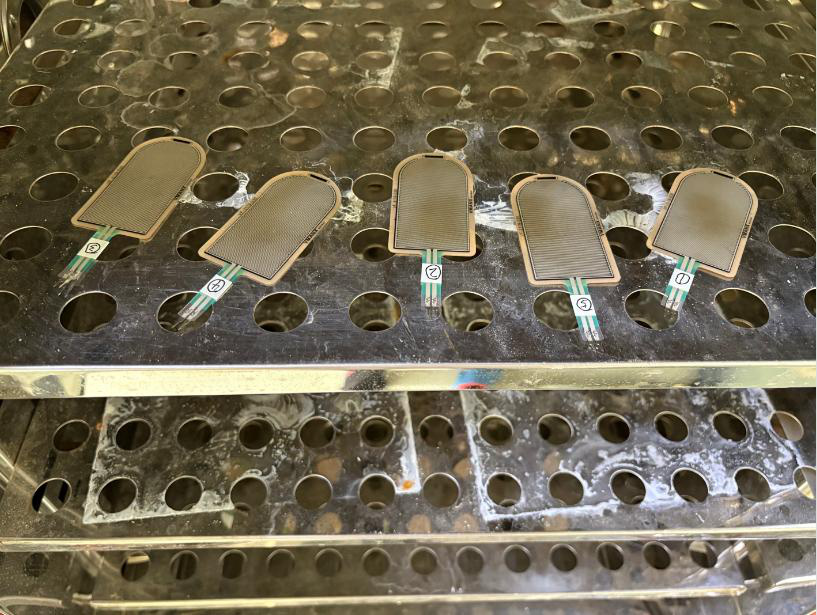
Vzorky 1–5 uloženy v teplotně-vlhkostní komoře HQ-TPH150 po dobu 240 hodin při vysokých i nízkých teplotách
Otázka 6. Co to znamená pro zákazníka, který hodnotí VMANX?
Znamená to, že data existují ještě předtím, než je o ně požádáte. Každá výše uvedená hodnota pochází z datovaného laboratorního záznamu – síla spouštění, rozsah, konzistence, impedance, hystereze, odolnost, drift, tepelný šok, klimatické uskladnění, maximální zatížení a kalibrace – a na vyžádání lze dodat jako surové protokoly testů.
Pro lékařské a životně důležité aplikace používá společnost VMANX tento protokol jako standardní postup, nikoli jako jednorázovou akci. Senzory jsou charakterizovány napříč jednotkami, nikoli pouze na základě jediného referenčního vzorku; před uvedením do provozu jsou podrobeny environmentálnímu zatížení; a pokud zákazník provádí nezávislý životní test, sladíme svá data s jeho výsledky.
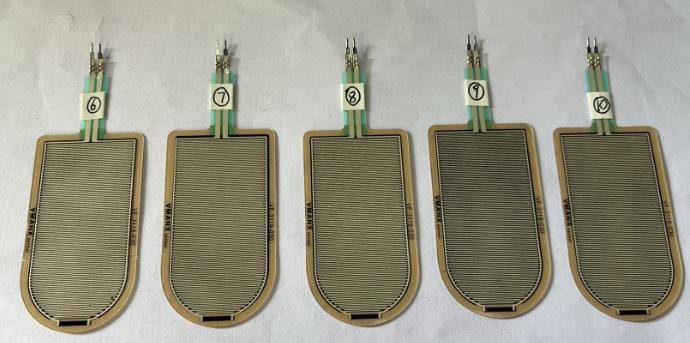
Flexibilní sílový senzor VF-3119-030 FSR — vzorky z otestované šarže
Na první pohled
▪ 11 položek testu spolehlivosti — 100% úspěšnost (15.–27. srpna 2026)
▪ Aktivační síla 4–9 gf | rozsah ověřen do 80 kg (89,7 Ω, žádné selhání)
▪ dlouhodobý posun ±2,5 % během 10 dnů při konstantní zátěži 5 kgf
▪ Funkční po 20 cyklech tepelného šoku (+85 °C ↔ −40 °C) a po 240 h klimatického skladování
▪ Životnostní test stlačení s 10 000 000 cykly ověřený zákazníkem — úspěšně dokončen