EN
EN

Zdravstveni enkratni EEG senzor: specifikacije in pogosto zastavljena vprašanja | VMANX
VMANX, proizvajalec, certificiran v skladu z ISO 13485:2016, s 19-letnimi izkušnjami v tiskani elektroniki, proizvaja medicinski enkratno uporabljiv EEG senzor – enkratno uporabljiv EEG elektrodni trak za klinično elektroencefalografijo v operacijskih salah, intenzivnih enotah in laboratorijih za spanec po vsem svetu. Proizveden v Dongguanu, Kitajska, z natančnim sitotiskom, laserjem vodeno izrezovanjem in sestavljanjem v čistih prostorih razreda 100 000, senzor zagotavlja izmenični impedans ≤ 5 kΩ pri 10 Hz in notranji šum ≤ 2 μVpp, saj bolniške ustanove in medicinski OEM-i potrebujejo ponovljivo verodostojnost signala iz vsakega enkratno uporabljivega izdelka, ki ga odprejo.
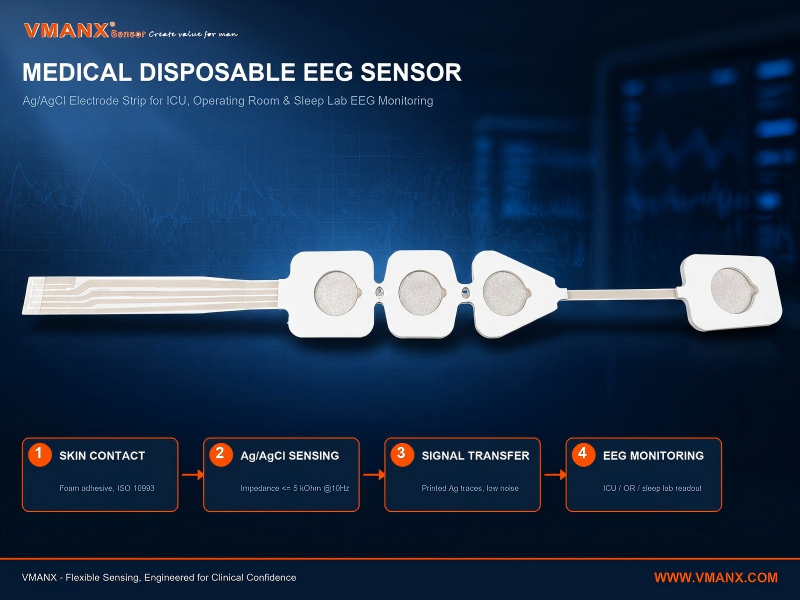
Ključne značilnosti in prednosti
VMANX-en enkratno uporabljiv EEG senzor je zasnovan na tristratni sestavni strukturi, pri kateri vsak sloj rešuje določen klinični problem: kakovost signala, udobje bolnika in električna varnost.
Visoka verodostojnost signala iz Ag/AgCl-senzorskega vmesnika
Srednji sloj uporablja srebrni/srebrno-kloridni (Ag/AgCl) senzorski elektrod za pretvorbo kortikalnih biopotencialov z minimalnim polarizacijskim odmikom. Meritve so izvedene v skladu z IEC 60601-2-26; impedanca na meji med elektrodo in kožo znaša ≤5 kΩ (običajno ≤3 kΩ) pri 10 Hz, notranji šum pa je ≤2 μVpp v frekvenčnem pasu 0,5–100 Hz. Primer uporabe za stranko: v laboratoriju za preučevanje spanja se v nočnem obdobju zapiše osem ur podatkov; nizka osnovna raven šuma omogoča čist razredčevanje faz spanja namesto, da bi tehnik moral ob 3. uri zjutraj ponovno namestiti elektrode.
Obnova po defibrilaciji za uporabo v kritični negi
V intenzivnih enotah in operacijskih dvoranah mora EEG-elektroda prenesti dogodke, ki jih običajne nadzorne ploščice nikoli ne izkušajo. Senzor VMANX se obnovi v času ≤10 sekund po defibrilacijskem izboju 5 kV, odmik napetosti po defibrilaciji pa znaša ≤100 mV po 30 sekundah – obe lastnosti sta preverjeni v skladu z IEC 60601-2-26. Nevromonitoring se nadaljuje namesto, da bi med reanimacijo prišlo do izgube signala.
Biokompatibilnost in udobje bolnika po načrtu
Osnovni sloj je medicinski lepilni penasti material, ki je certificiran v skladu z ISO 10993 in porazdeljuje tlak po čelu ter zagotavlja trdno lepljenje tudi pri dolgotrajnih meritvah. Nabor materialov je preverjen kot necitotoksičen (razred 0, ISO 10993-5) in skladen z zahtevami za preizkušanje občutljivosti kože (ISO 10993-10); sestava vzdrži 5000 VAC v času 60 sekund brez preboja, kot določa standard IEC 60601-1. Za dolgotrajno spremljanje ranljivih ali pediatričnih bolnikov je udobje klinični parameter, ne pa le udobje.
Kontrola proizvodnje v skladu z ISO 13485
Vsaka enota se proizvaja v okviru certificiranega sistema za upravljanje kakovosti po standardu ISO 13485:2016. Slikovne srebrne plasti, nanešene z ekranom, imajo dopustno odstopanje debeline ±5 μm, laserjem vodeno izrezovanje zagotavlja natančnost odprtine elektrode ±0,1 mm, sestavljanje pa poteka v čistih prostorih razreda 100 000 z zaščito pred statično elektriko (ESD). Vzorčenje po serijah zajema impedanco, lepilno adhezijo in biološko obremenitev; sterilizacija se izvaja z etilen oksidom v skladu s standardom ISO 11135. Izdelki imajo oznako CE za EU v skladu z uredbami MDR 2017/745 in so na seznamu US FDA 510(k); poleg tega izpolnjujejo zahteve RoHS 3.0 in REACH SVHC za globalne nabavne ekipе.
Tehnične specifikacije
|
Parameter |
Specifikacija |
Standardno |
|
Osebje za zaznavo |
Srebro/srebrni klorid (Ag/AgCl) |
— |
|
Strukturo |
3-plastna sestava: medicinska PET folija + srebrna plast, nanešena z ekranom / elektroda Ag-AgCl / medicinski penasti lepilni sloj |
— |
|
Izmenični tok – impedanca (10 Hz) |
≤5 kΩ (tipično ≤3 kΩ) |
IEC 60601-2-26 |
|
Napetostni premik enosmerne komponente |
≤±100 mV |
ANSI/AAMI EC12 |
|
Notranji šum (0,5–100 Hz) |
≤2 μVpp |
IEC 60601-2-26 |
|
Obnovitev po defibrilaciji |
≤10 sekund po 5 kV |
IEC 60601-2-26 |
|
Dovoljena napaka bias toka |
±300 nA, odmik izhoda ≤5% |
ANSI/AAMI EC12 |
|
Notranji upor med elektrodama |
≤ 1 Ω |
Notranji standard |
|
Dielektrična vzdržljivost |
5000 VAC, 60 s, brez preboja |
IEC 60601-1 |
|
Biokompatibilnost |
Necitotoksično, razred 0; skladno z zahtevami za občutljivost kože |
ISO 10993-5, -10 |
|
Toleranca debeline srebrnega sloja |
±5 μm |
Tiskanje s sitom |
|
Natančnost odprtine elektrode |
±0,1 mm |
Laserom vodeno rezanje z odlaganjem |
|
Okolje sestavljanja |
Čistilna soba razreda 100 000, nadzor elektrostatičnega pranja (ESD) |
— |
|
Sterilizacija |
Etilen oksid (EO) |
ISO 11135 |
|
Sistem kakovosti |
Certificirano po ISO 13485:2016 |
— |
|
Regulativni |
EU CE (MDR 2017/745), na seznamu US FDA 510(k) |
— |
|
Pakiranje |
Sterilna aluminijasta vrečka, 1 senzor na vrečko, označeno z UDI-DI |
— |
|
Shranjevanje / rok uporabnosti |
15–30 °C, <70 % relativne vlage / 24 mesece nepodprto |
— |
Pogosto zastavljena vprašanja strank
V: Za kaj se uporablja medicinski enkratni EEG-senzor?
O: To je enkratna elektrodska trak, ki se nanese na kožo bolnika – običajno na čelo – za zajemanje električne aktivnosti možganov za EEG-monitoring. Zdravstveni strokovnjaki ga uporabljajo v operacijskih dvoranah, intenzivnih enotah in za dinamičen ali nočni EEG-zapis, pri čemer vsak nov sterilni elektrod za posameznega bolnika odpravi tveganje prečnega onesnaževanja in potrebo po čiščenju.
V: Koliko je impedanca elektrode in zakaj je pomembna?
O: AC-impedanca na meji med elektrodo in kožo znaša ≤5 kΩ pri 10 Hz, običajno ≤3 kΩ, preverjeno po IEC 60601-2-26. Nižja impedanca pomeni čistejši razmerje signal/šum, manj artefaktov in manj potrebe po ponovni pripravi kože ali ponovni namestitvi elektrod v sredini zapisa.
V: So je enkratna EEG elektroda varna po defibrilaciji?
O: Da. Senzor je preskušan v skladu z IEC 60601-2-26 za obnovo po defibrilaciji in se znotraj 10 sekund po izbočitvi 5 kV vrne v normalen način delovanja, pri čemer je ostanek odmika napetosti ≤100 mV po 30 sekundah. Prav tako prenese 5000 VAC v času 60 sekund brez dielektričnega preboja v skladu z IEC 60601-1.
V: Katera potrdila in regulativna odobritve veljajo?
O: Proizvodnja poteka v okviru certificiranega sistema upravljanja kakovosti ISO 13485:2016. Izbdelek nosi oznako CE EU v skladu z uredbami MDR 2017/745, je na seznamu ZDA FDA 510(k) ter izpolnjuje zahteve RoHS 3.0 in REACH SVHC. Biokompatibilnost sledi seriji standardov ISO 10993.
V: Kakšni so pogoji za pakiranje, shranjevanje in rok uporabnosti?
O: Vsak senzor je dobavljen v posamezni sterilni aluminijasti vrečki z oznako UDI-DI, številko serije in rokom uporabnosti. Shranjujte pri temperaturi 15–30 °C in relativni vlažnosti zraka pod 70 %, izven neposredne svetlobe. Rok uporabnosti nepodprtega izdelka znaša 24 mesece.
V: Ali lahko VMANX prilagodi razporeditev elektrod za naš EEG napravo?
A: Da. VMANX ponuja razvoj po naročilu (OEM/ODM), ki zajema geometrijo elektrode, dolžino izhodne trakaste povezave, vmesnik priključka in označevanje vrečk, zato senzor ustreza določenemu EEG ojačevalniku ali sistemu za nevromonitoring, namesto da bi napravo prisilili, da se prilagodi splošni ploščici.
Zaključek
Za bolniške zavode, distributerje in proizvajalce sistemov za nevromonitoring (OEM) je enkratna EEG elektroda dobra le toliko, kolikor so dobri standardi, na katerih temelji. VMANX združuje Ag/AgCl-senzorsko tehnologijo, materiala, potrjena z ISO 10993, in proizvodnjo, nadzorjano z ISO 13485, v enkratni senzor, ki zagotavlja dosledno delovanje od prve do zadnje vrečke. Raziskujte enkratni EEG senzorji stran izdelka, pregledajte celoten asortiment medicinskih senzorjev , ali si oglejte, kako VMANX uporablja isto natisnjena elektronika platformo tako v kliničnem kot v industrijskem senzorju.
VMANX — fleksibilen senzor, zasnovan za klinično zaupanje. | www.vmanx.com
Predlogi za medije in SEO
Glavna slika: ime datoteke: medical-disposable-eeg-sensor-vmanx.jpg | ALT: »Medicinska enkratna EEG senzorska elektrodna trakca s štirimi Ag/AgCl ploščicami – VMANX«
Podrobna slika: ime datoteke: disposable-eeg-electrode-strip-agagcl-layer.jpg | ALT: "Ag/AgCl zaznavni sloj enkratnega EEG elektrodne traku VMANX"
Slika proizvodnje: ime datoteke: eeg-sensor-iso-13485-cleanroom-production.jpg | ALT: "Proizvodnja enkratnih EEG senzorjev VMANX v čistih prostorih, certificiranih po ISO 13485"
Video (YouTube): naslov identičen naslovu članka + "| VMANX"
Meta opis (156 znakov): "Zdravstveni enkratni EEG senzor od VMANX: elektrodni trak Ag/AgCl, impedanca pod 5 kOhm, testirano po ISO 13485 in IEC 60601-2-26. Tehnični podatki in pogosto zastavljena vprašanja znotraj."
Opomba za objavo: prikazati datum objave na domači strani novice; ohraniti pogostost objav 2–4 člankov na mesec.